

We’ve been told more than once that we have too many systems and procedures in place at Ghost Robot. I get it. We’re a small company. Why fill out a form when you can just Slack someone?
Zach and I have been working together for over 20 years. We started when you still had to fax things and build physical binders and file folders for every aspect of a project. Equipment lists, POs, contracts, releases, insurance certificates. Everything had its place. And if you wanted something done a certain way, you needed a clear process for doing it.
We had a production manual. It was over 20 pages long. And we’re talking an old-fashioned Word doc. 12-point font. Not a fancy deck with big words and bold images.
So when employees complain about having to do too much paperwork, it may help to remember where we came from.
The funny thing is that when people leave Ghost Robot and move on to their next job, they inevitably call us up asking for our manuals, our file trees, or one of the forms we’ve spent decades refining. I once heard from a freelancer who went to work at another studio and discovered they were using all of our old forms. I guess that’s a form of flattery.
For years, we’ve operated under the mantra “systems create freedom.” A quick Google search confirms we did not come up with this ourselves.
The basic idea is simple: well-designed systems eliminate daily chaos, decision fatigue, and constant reinvention. If you can standardize the repetitive stuff, you get back time and brain space for the things that actually require thought, judgment, and creativity.
Do the boring stuff well, and you have more room for the fun stuff.
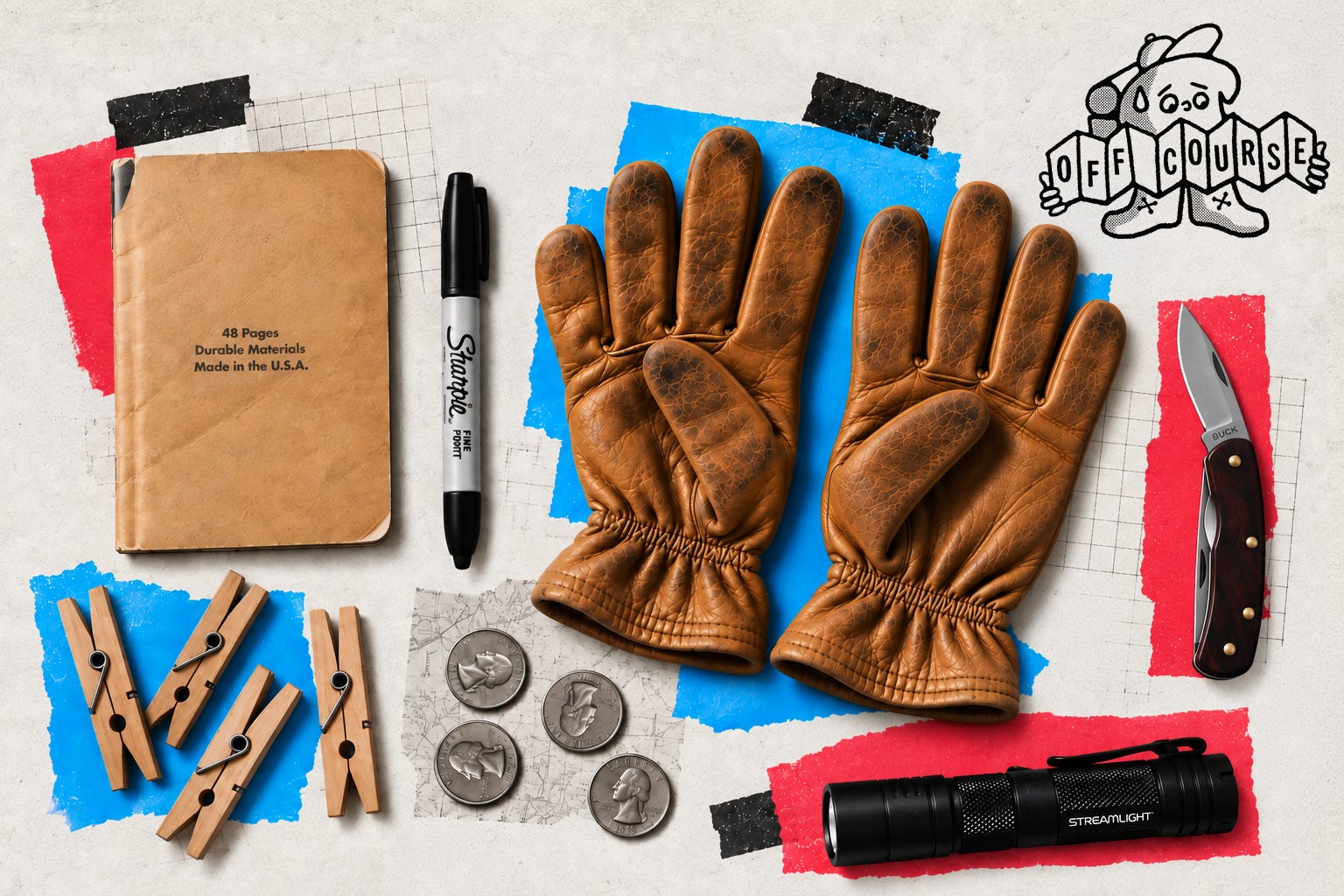
Recently, I got curious and went down a wormhole looking through old versions of our employee manuals. I found one from 2007 that included a list of things every production assistant was expected to carry with them:
Pouch
Pad of paper
Pen/pencil/Sharpies
Watch
Work gloves
Knife
Driver’s license
Matches
Clothespins
Crew list
Contact list
Call sheet
Quarters
Belt for walkie-talkie
Maglite
That’s right. Quarters.
Because when your cellphone died, or your pager went off, you needed to be able to find a payphone, call the office after making a run, and see if there was anything else they needed you to pick up.
If I remember correctly, this list originally came from a PA manual that legendary indie producer Ted Hope had put together. So with that in mind, I suppose I can’t be too mad that other companies have adopted our forms.
Around that same time, we were in the original Ghost Robot office at 373 Broadway, just south of Canal Street, where Tribeca and Chinatown meet. The office couldn’t have been more than 300 square feet. We had big windows overlooking Broadway with wide limestone ledges outside. We used to open the windows, climb out, and sit on those ledges to smoke cigarettes six stories above the street.
It was a different time.
Back then, and for much of Ghost Robot’s early existence, we always had an intern around the office. Some of them were great and ambitious and wanted to know everything. Some of them just sat around waiting to be told what to do. [Little-known fact: I met Zach when I was an intern on one of his shoots. Two years later, I was helping him build a new company.]
Around the same time we published our original manual, we had an intern I’ll call John.
John was quiet and hardworking. He did what he was asked to do, and that was pretty much it. He also always wore a backpack. He wore it when he went on runs. He wore it when he came back. He even wore it while sitting in the office waiting for something to do.
More than once, we wondered what the deal was with the backpack. What could he possibly need to carry with him everywhere he went? What would it take to get it off his back? Mostly, we just thought he was a weird guy.
One day, John came back from a run and was acting strangely. He stood by the door and wouldn’t move, muttering to himself and swaying back and forth. We asked if he was all right. He grumbled a “yeah” back.
He clearly wasn’t.
When we asked again, he was barely responsive. We tried to get him to sit down, and he collapsed onto the floor. He started to convulse.
We called 911. While we waited, we took off his backpack so he could lie flat. [Side note: I recently took a Red Cross First Aid course for a coaching license. EVERYONE should do this.]
EMS arrived and took him to the hospital.
His backpack was still sitting on the floor.
We didn’t have an emergency contact for him, but we knew someone needed to know what had happened, so we opened his backpack hoping to find his phone or something that might tell us who to call.
We found his driver’s license and address and were able to parlay that into a number for his mom. She told us John was diabetic and that his blood sugar had dropped dangerously low.
And then we found a few other things.
In addition to his driver’s license, there was a pouch. A pad of paper. Pens, pencils, and Sharpies. Work gloves. A knife. His driver’s license. Matches. Clothespins. A crew list. A contact list. A call sheet. Quarters. A belt for his walkie-talkie. A Maglite.
Everything on the list.
My heart sank.
This guy we barely knew had taken us completely seriously. We had handed him a list of what a good PA was supposed to carry, and he had gone out and gotten every single thing on it. He carried it with him every day because we told him to.
Meanwhile, I knew almost nothing about him.
A few hours earlier, I probably would have told you he was the quiet intern with the weird backpack. Now he was on his way to the hospital, I was scared, and we were digging through that backpack because we didn’t even know who to call.
I felt like shit.
He had taken the time to learn exactly what we expected of him. I hadn’t taken the time to learn much of anything about him.
For years, I’ve thought about the story as a lesson in how you treat people, especially young people who are just starting. But it also changed the way I think about all those systems and manuals we’d been so careful to build.
We thought we were writing down how to do the work. But to someone new, we were also telling them what mattered. Yet for all the things we had thought to put into our systems, we hadn’t thought to ask for an emergency contact. We had documented what kind of flashlight a PA should carry, but not who to call if that PA ended up in an ambulance.
So we added a form.
Twenty years later, we’ve evolved as a company. We’re less concerned with what you need to take to set and more concerned with how to solve business problems for our clients. Strategy, creative thinking, communication, curiosity, production. The work evolved, so the systems had to evolve with it.
We still have a lot of them. Some have outlived their usefulness. Some should probably disappear. Every once in a while, someone will ask if they really need to fill that thing out. And sometimes they’re right.
The answer isn’t to have no systems. It’s to keep building better ones.
A good system means the person who knows the answer doesn’t always have to be there. It means the newest person at the company doesn’t have to know who to ask, or be afraid of asking a stupid question. It means we don’t have to solve the same problem from scratch every time it comes up.
But a good system also needs to leave room for judgment. John’s list gave him a very specific definition of what a good PA should carry, and he followed it perfectly. What it couldn’t tell him was which things really mattered, which rules were flexible, or when circumstances had changed enough that it was okay to throw the whole thing out the window.
While I was in my handbook-hole, I pulled up the most recent welcome packet we give new employees. We had recently gone through a brand refresh and spent a lot of time rethinking how we talk about Ghost Robot, what we do, and what we care about. But the document we hand someone on their first day still belonged to an older version of the company.
So I rewrote it.
What started as an update to some old policies became something a little different. There are still procedures in there. How we use email. How we communicate deadlines. Where files should live. How projects move through the company. The boring stuff.
But there’s also a lot more about why we work the way we do. What we expect from each other. How we approach problems. What it means to be curious. When to follow the process and when to question it. The old manual was mostly about how to do your job. The new one is more about how we work together.
Systems create freedom. I still believe that. But systems also tell people what you care about. So be careful what you put on the list.
Here’s our new welcome packet.
Feel free to steal it.

