

I am the child of two public school teachers. This simple fact has shaped nearly every detail of my life, starting with where I was born.
After graduating from college in the late 1970s, my parents were looking for a place upstate to call home. They were both from Long Island, but had gone to SUNY Oneonta, and my dad had developed a fondness for Upstate New York after visiting family there as a kid. They wanted to settle somewhere they could afford a house, raise a family, and teach.
They ended up in Newburgh, NY. It was affordable, historic, and in the middle of an ambitious effort to desegregate its public schools.
Brown v. Board of Education had been decided in 1954, but more than 20 years later, plenty of American schools were essentially still segregated. Kids generally attended their neighborhood schools, which meant that segregated neighborhoods produced segregated schools.
Magnet schools were one strategy for changing that. Districts developed schools with specialized programs designed to attract families from across town, rather than simply enrolling whichever children lived nearby. By 1980, Newburgh was implementing a desegregation plan supported by millions of dollars in federal funding. Its schools developed their own identities, curricula, and teaching approaches, giving families choices based on what each school offered.
For two young, progressive educators, this was a pretty exciting proposition. They moved to Newburgh, started teaching, and eventually had me.
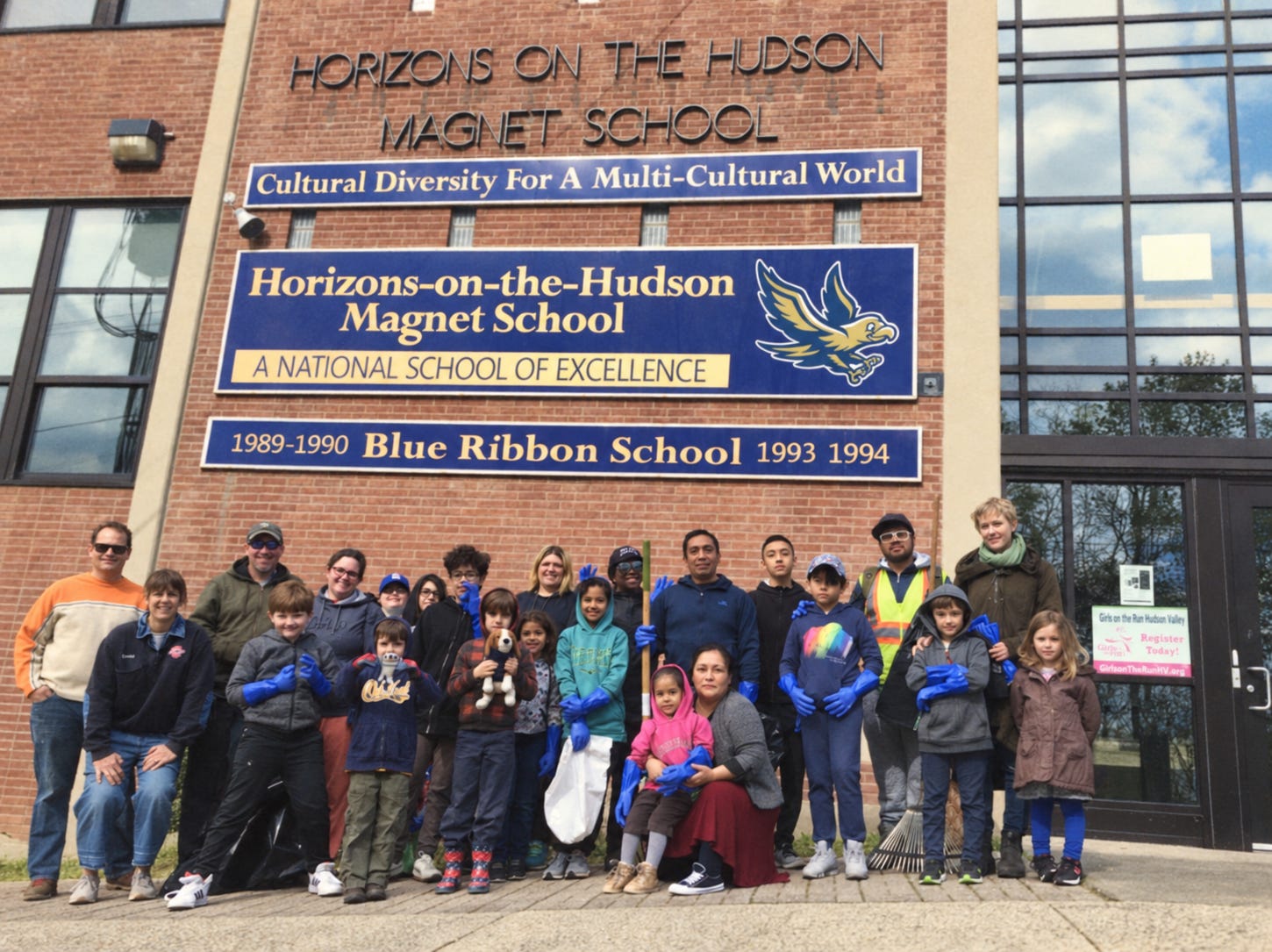
I benefited enormously from the education I received there. My schools offered advanced classes, extracurricular activities, and opportunities to explore interests I probably wouldn’t have discovered otherwise. I’ve already written about some of my early creative adventures, including making zines, but the thing that really changed my life was a video production class.
I still remember learning how to edit, and how exciting it was to be able to choose whatever music I wanted to put underneath the footage. It felt like the most important decision in the world and an extraordinary amount of power. Until then, I figured I would become a teacher, too. But now, I had a new ambition.
I ended up at NYU, where I thrived in the surprisingly familial environment of its film program. NYU is an enormous institution, but the film program was relatively small, with cohorts of around 200 students. I graduated from high school with more than 800 classmates, so college actually felt like a much smaller community.
I got to know my fellow students and the faculty really well, particularly through the production center, where I had a work-study job. Christina DeHaven and Pete Chatmon became mentors and confidants. They offered advice, encouragement, and occasionally a much-needed admonishment. They helped me figure out how to take all the things I wanted to do and turn them into something resembling an actual career.
I’ve written about what happened next, so I’ll spare you another account of my early adventures in filmmaking. Instead, let’s jump ahead to 2012, when my son was born, and I realized, “oh shit, kids are expensive”.
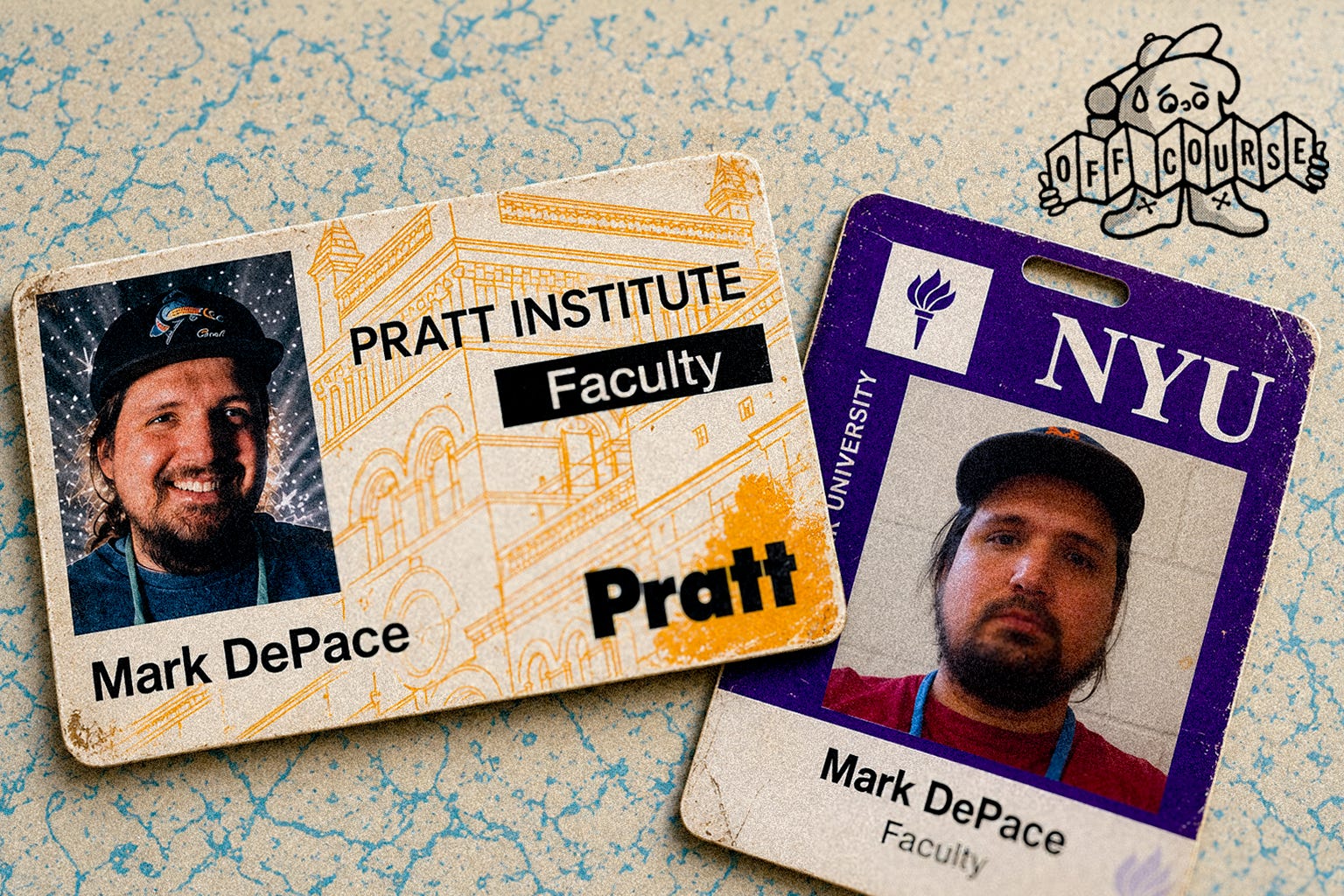
Ghost Robot was keeping me plenty busy, but I was actively looking for supplemental income. I randomly had a colleague mention that he wasn’t going to be able to teach his class at Pratt anymore. He asked if I knew anyone, and I said, “Sure, I’ll do it,” despite having no teaching experience and absolutely no reason to believe Pratt would actually hire me.
But the conversation gave me an idea. I reached out to Christina at NYU to see if there might be any opportunities there, too.
Sadly, following a tragedy on the set of a student film, NYU had introduced a program requiring student productions to work with professional production advisors. The job was to help students prepare their production materials, make sure they understood the school’s procedures, and generally prevent them from doing anything too dangerous or stupid. It was essentially the work I had been trained to do, making pre-production books for movies and commercial clients. Document every detail of your plan beforehand.
It was part-time work. I’d meet with a few classes at the beginning of the semester, review their plans, and follow their projects through production. It sounded manageable, and it was work I already understood pretty well.
I signed up. And then Pratt hired me, too.
Suddenly, I had two academic jobs on top of running Ghost Robot and raising a small family. My parents had spent their entire careers preparing to be educators, and I’d somehow stumbled into it.
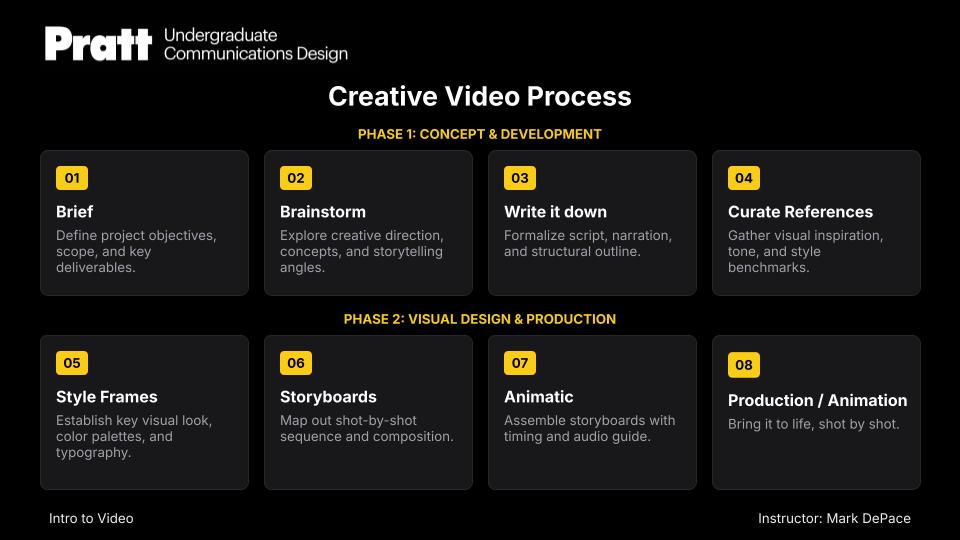
At Pratt, I taught filmmaking and animation to students in the Communications Design program. These weren’t film students, but it was becoming increasingly obvious that anyone hoping to work in design, advertising, or communications needed to understand how to make moving images.
I’m not a designer or animator, so I focused on something I knew well: how to take an idea and figure out what to do with it. At Ghost Robot, we were constantly being asked to solve creative problems, often without a clear roadmap for how to get there. That’s what I wanted to share with the students. The technical skills were important, but I was more interested in helping them develop the confidence to approach something unfamiliar, work through the problems, and make creative decisions they could actually explain. The tools and output would change, but that ability to think through a creative challenge would be useful no matter where they ended up.
After a few years in these two roles, I was asked to teach a class on producing independent films in NYU’s summer program. This was less about the creative process and more about the business of getting a movie made. The fun stuff: financing, contracts, legal agreements, and distribution.
Most of what I knew about the independent film business I’d learned from my business partner, Zach Mortensen, so I asked him to teach alongside me. We’d spent years making projects together, but he’d always had a much better handle on the business and legal side of things. Preparing to teach it meant spending a lot more time understanding how those pieces fit together. I ended up learning quite a bit myself.
I loved being part of an academic community again. I met other working professionals who were teaching, some of whom I’m still connected with today. I spent time around people making art and talking about ideas without necessarily having to figure out how to sell them. I attended holiday parties, film festivals, and judged the Pratt Show. It was nice to be around so many people who were excited about making things, especially the students.
They were easily the most fun part. They came up with things I never would have thought of, and their willingness to try new things was a nice reminder of what it felt like to make things before clients, budgets, and years of professional experience started influencing every decision. There were always a few who were especially talented and ambitious, but every once in a while someone would come along who was downright audacious. They’d show up with an idea so ambitious I’d wonder how on earth they expected to pull it off. Occasionally, they actually did. We ended up hiring more than a few of them at Ghost Robot.
Video by Caroline David - Pratt, 2015
The extra money was nice, but the unexpected benefit of teaching was what it did for my career in advertising.
By that point, I’d spent years developing ideas, working with clients, leading creative teams, and figuring out how to turn an ambitious concept into something that could actually get made. A lot of that had become instinctive. I could walk into a meeting, hear a brief, and start seeing possibilities or problems almost immediately. But knowing what you would do and being able to explain why it’s the right thing to do are very different skills.
When you’re teaching, you can’t just tell someone that a particular approach is the right one because you’ve been doing this for 15 years. [You can, but you’re probably not going to be a very good teacher.] You have to explain why, and you have to do it in a way that is memorable and engaging.
I spent a lot of time digging through old project files, looking for examples I could bring into class. I’d pull apart projects we’d completed years earlier and walk students through the decisions we’d made along the way. Not just how we’d produced something, but why we’d chosen that idea, what problem we were trying to solve, and how the work changed between the original brief and the finished piece.
That meant not only revisiting work I was proud of but also remembering exactly how we’d gotten ourselves into a mess [Which you know isn’t hard for me]. Having to explain those decisions forced me to examine my own thinking, including the assumptions I’d made and the things I might approach differently now.
It was great practice, standing in front of people and explaining creative ideas. Sometimes I was very prepared, with decks and notes and fun things to watch. Sometimes I was making it up as I went. But I got more comfortable presenting, answering questions, and defending an approach without getting defensive about it.
That translated almost immediately to my work with clients.
I became better at helping people understand the thinking behind an idea, rather than simply presenting the finished concept and hoping they liked it. I could explain what we were trying to accomplish, why we believed a particular approach would work, and how it connected to the client’s larger goals. When someone challenged an idea, I was better equipped to have a conversation about the strategy rather than treating it as a disagreement about taste.
It also changed how I worked with my own team. Being able to articulate why something works, or why it doesn’t, is a lot more useful than simply telling someone you like it, or you don’t. I was getting better at giving people direction without prescribing every decision they needed to make.
I’d gone into teaching because I needed some extra income, but it ended up making me a better creative leader. I was more confident in my own judgment, better at communicating it, and more interested in helping other people develop theirs.
My parents had spent their careers in classrooms, and I’d grown up with education being a constant presence in our house. I’d gone off to film school, started a company, and spent years doing something that seemed pretty far removed from the family business. Then, without really planning to, I found myself in a classroom, too.
For several years, I split my time between Ghost Robot, teaching, and family life. When we moved to Hudson, I continued going back and forth to the city, staying there two or three nights during the week. That worked reasonably well until COVID, when we gave up our apartment in Brooklyn. Like everyone else, I spent some time teaching virtually. But when students returned to campus, I’d settled into living upstate full-time, and making the trip into the city regularly was becoming too much to manage. I had to step down from my roles. Fortunately, it wasn’t long before I found myself involved in public education again.
In 2021, I decided to run for the school board in Hudson, NY. I’d spent most of my adult life running a business, and I figured at least some of that experience would be useful. What I hadn’t anticipated was how much I still had to learn.
That’s Part Two of The Family Business. Give me about a week or so.
